
There’s a specific kind of dismissal HR professionals hear more than almost anyone else: “Oh, so you do the offer letters and the birthday cakes?”
It stings a little every time, and it’s also almost entirely wrong. Somewhere between “HR handles onboarding” and “HR decides who gets promoted, who gets let go, and what the entire company’s culture actually feels like,” there’s a career that’s far more strategic, far more emotionally demanding, and, for the people who do it well, far more lucrative than its reputation suggests.
If you’re considering HR as a career, or you’re already in it and wondering whether it actually pays off, let’s separate the reputation from the reality.
What Does an HR Manager Actually Do?
HR isn’t one job, it’s several, bundled under one umbrella that varies enormously depending on the company and the specialization you choose:
- Talent acquisition – Sourcing, interviewing, and closing candidates, often under pressure from hiring managers who wanted the role filled yesterday.
- HR business partnering (HRBP) – Working directly with business leaders on workforce planning, performance management, and organizational decisions.
- Compensation & benefits – Designing pay structures, benchmarking salaries, and managing the financial architecture of how people are paid.
- Employee relations & compliance – Handling conflicts, policy violations, labour law compliance, and the genuinely hard conversations nobody else wants to have.
- People analytics – Using data to predict attrition, measure engagement, and justify HR decisions with numbers instead of instinct.
The version of HR that plateaus early is almost entirely administrative: documentation, onboarding logistics, and policy paperwork. The version that pays exceptionally well is strategic – the HR professionals trusted with real business decisions, not just process execution.
HR Manager Salary in India (2026)
HR compensation in India tells a story of two very different careers wearing the same job title, depending on how far you move from administrative work toward strategic influence.
| Level | Experience | Salary Range (CTC) |
| HR Fresher / Executive | 0–2 years | ₹2.5 – 5 LPA |
| HR Generalist / Executive | 2–5 years | ₹6 – 12 LPA |
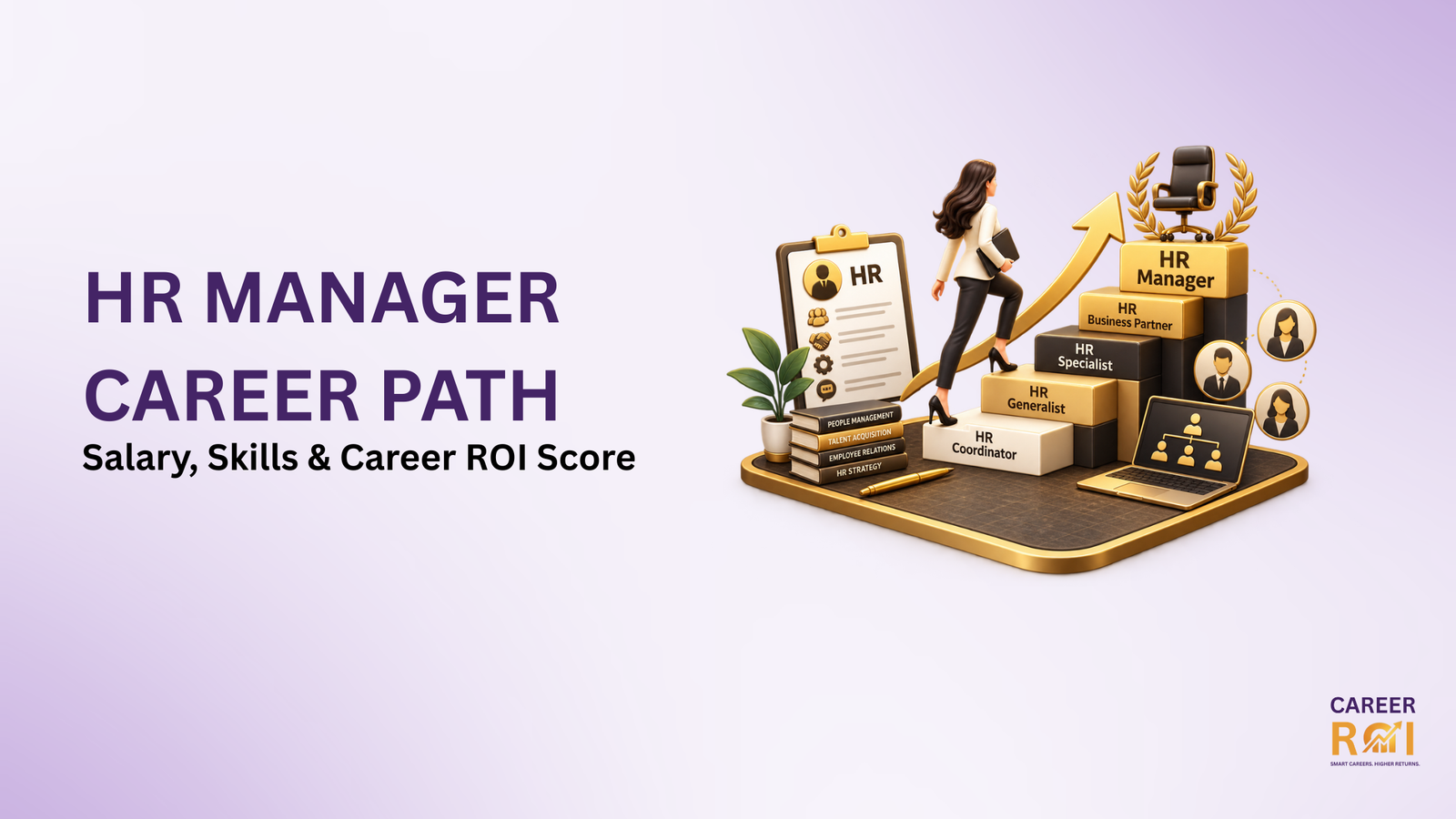
| HR Manager | 5–8 years | ₹12 – 20 LPA |
| Senior HR Manager / HRBP | 8–12 years | ₹15 – 30 LPA |
| HR Director / VP / CHRO | 12+ years | ₹40 LPA – 1 Cr+ |
A few nuances worth understanding before you plan around these numbers:
- The admin-vs-strategic divide is the single biggest salary differentiator in HR. Two HR professionals with identical years of experience can be earning vastly different salaries: the one still doing pure documentation and coordination work, and the one who’s become a trusted business partner influencing real decisions.
- HRBP roles command a real premium. Because they sit closest to business strategy, HR Business Partners consistently out-earn generalist HR roles at the same experience level.
- Industry matters significantly. IT, fintech, and global capability centres (GCCs) pay noticeably more than traditional manufacturing or education sectors, largely because of the scale and complexity of the workforces they manage.
- This is a slow-burn career, not a fast one. Unlike sales or tech roles where a strong year can trigger a dramatic jump, HR compensation growth is closely tied to accumulated trust and business exposure; it rewards patience and depth over speed.
Skills That Actually Move Your Salary in HR
The skill gap between a plateaued HR career and a thriving one isn’t really about “knowing HR policies.” It’s about a specific shift in how you’re perceived within the business.
Skills with the strongest salary correlation:
- Business acumen – HR professionals who understand the company’s business model, revenue drivers, and strategic priorities are trusted with far more responsibility than those who only understand HR processes in isolation.
- People analytics – The ability to use data to predict attrition risk, measure engagement, and justify workforce decisions with evidence, not just intuition, is one of the fastest-growing high-value skills in HR today.
- Difficult conversations – Performance management, layoffs, and conflict resolution. This is uncomfortable, unglamorous work, and the professionals who can do it with genuine skill and empathy are disproportionately valued.
- Compensation & benefits design – A specialized, technically demanding skill that pays well precisely because relatively few HR professionals develop deep expertise in it.
- Labour law and compliance knowledge – Becomes exponentially more valuable as companies scale, since compliance mistakes carry real legal and financial risk.
- Stakeholder influence, not just support – The shift from “HR helps the business” to “HR shapes the business” is the single biggest career unlock in this field, and it’s built through consistent, evidence-backed advocacy, not tenure alone.
How to Break Into and Grow in HR
- Most people enter through recruitment. It’s the most common and accessible entry point into HR, but staying purely in recruitment for too long can actually slow your long-term growth if you don’t deliberately move toward generalist or business-partnering responsibility.
- An MBA (HR) or MSW helps, but isn’t mandatory. It provides structured entry and credibility, especially at larger companies, but plenty of successful HR leaders built their careers through generalist roles and demonstrated business impact instead.
- Actively seek exposure beyond your assigned function. If you’re in recruitment, ask to sit in on workforce planning discussions. If you’re in generalist HR, ask to shadow compensation benchmarking. Growth in HR is disproportionately about earned exposure, not job title alone.
- Certifications add credibility, not automatic pay jumps. SHRM, CIPD, and similar certifications help you build structured knowledge and signal seriousness, but they work best combined with real, demonstrated business impact, not as a substitute for it.
Career ROI Score: HR Manager
Overall ROI Score: 6.8 / 10
| Factor | Rating | Why |
| Earning Potential | 7/10 | Strong ceiling at senior/strategic levels, but a genuinely slow, steady climb rather than a sharp early curve |
| Time to Entry | 8/10 | Accessible entry point, especially through recruitment, without requiring a specialized technical degree |
| Job Security | 7/10 | Every company needs HR, but headcount in administrative HR roles is increasingly vulnerable to automation |
| Skill Transferability | 7/10 | Business acumen, negotiation, and people-analytics skills transfer well into consulting, operations, and leadership roles |
| Long-Term Growth | 8/10 | Clear, well-defined path to Director, VP, and CHRO, with CXO-level compensation genuinely achievable |
| Work-Life Balance | 6/10 | Manageable most of the year, but genuinely demanding during hiring surges, layoffs, or organizational restructuring |
Who this career rewards: People who are genuinely good with people and comfortable with hard conversations, not just the easy, celebratory ones. It rewards patience, business curiosity, and the willingness to build trust slowly rather than chase fast wins.
Who this career will frustrate: people looking for rapid, dramatic salary jumps early in their career, or those who want to stay purely in administrative, low-conflict work. If difficult conversations genuinely drain you rather than just challenge you, the ceiling in this field gets much harder to reach.
FAQs: HR Manager Career Path
Q1. Is HR a good career choice in India in 2026?
Yes, particularly for those willing to move beyond administrative work into strategic, business-facing roles. HR is increasingly recognized as a data-driven, strategic function, and compensation at senior levels reflects that shift.
Q2. Do I need an MBA to become an HR Manager?
Not strictly, though an MBA (HR) or MSW provides a structured, credible entry point, especially at larger companies. Many successful HR leaders built their careers through generalist roles and demonstrated impact instead.
Q3. What’s the difference between an HR Generalist and an HR Business Partner (HRBP)?
An HR Generalist typically manages a broad range of HR functions and processes. An HRBP works more closely and strategically with specific business leaders, directly influencing workforce planning and organizational decisions, and is compensated accordingly.
Q4. Why do some HR professionals plateau in salary while others don’t?
The biggest differentiator is whether someone stays in administrative, process-execution work or moves toward strategic, business-facing responsibility. Years of experience alone don’t guarantee salary growth in HR the way exposure and trust do.
Q5. Which industries pay HR professionals the most in India?
IT, fintech, and global capability centres (GCCs) typically offer the highest HR compensation, driven by the scale, complexity, and global exposure of the workforces they manage.
Q6. How long does it take to become a Senior HR Manager or HRBP?
Typically 8-12 years, reflecting how strongly HR compensation growth is tied to accumulated trust, business exposure, and demonstrated judgment rather than years of tenure alone.
The Closing Thought
HR is one of the few careers where your job, on a hard day, is to hold space for other people’s worst moments (a layoff, a conflict, a policy violation, a resignation nobody saw coming) and still show up composed enough to help the business move forward. That’s not “soft” work. It’s some of the most emotionally demanding work in any organization, and it deserves to be evaluated on those terms, not dismissed as paperwork and birthday cakes.
If you’re building a career in HR, the fastest way to grow isn’t waiting for tenure to speak for itself. It’s deliberately moving closer to the business: asking to be in the room where real decisions get made, and bringing evidence, not just empathy, when you get there.
The people who dismiss HR as unserious have usually never had to deliver the news you’ve had to deliver, or make the calls you’ve had to make. Let your growth, not your job title, make the argument for you.